Digital Hub
Overview
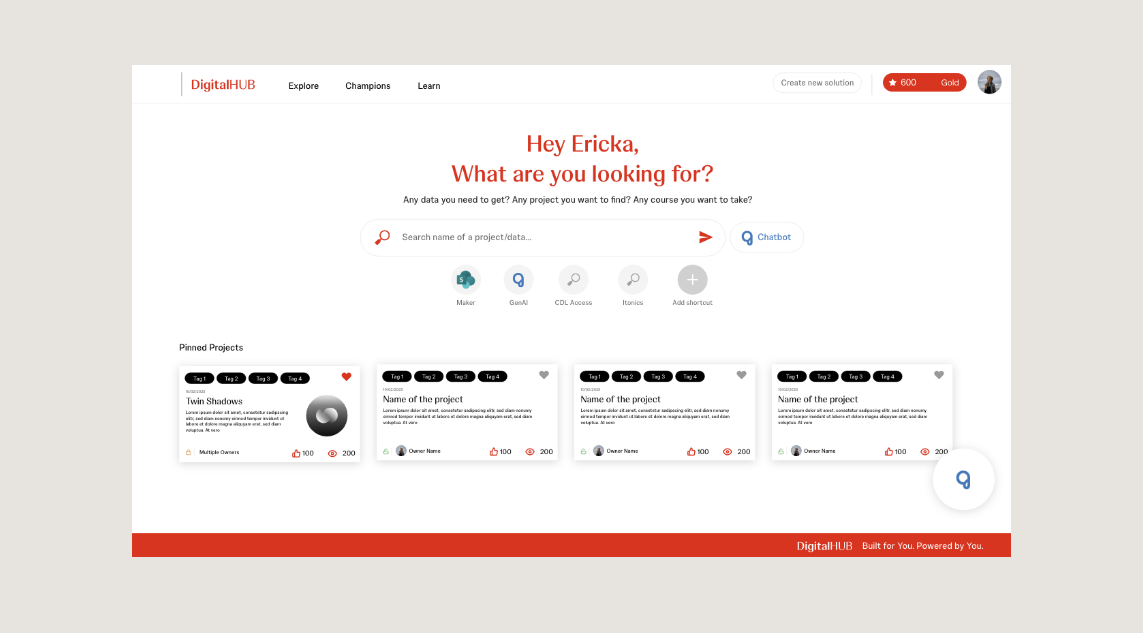
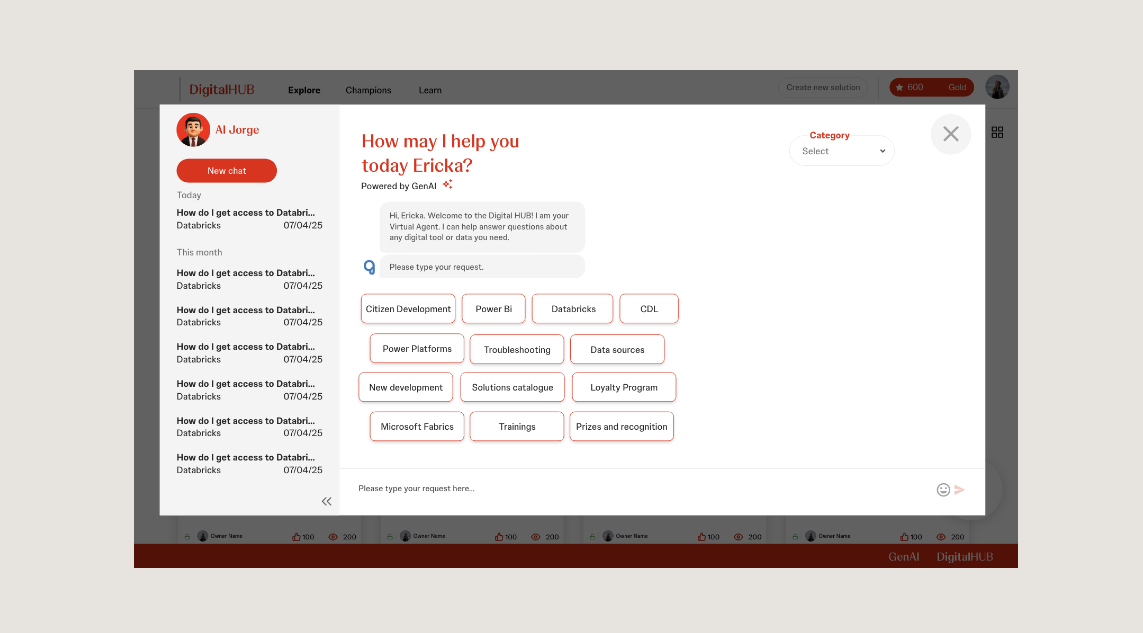
DigitalHub was created to help employees navigate a growing ecosystem of digital tools, learning resources, and innovation initiatives.
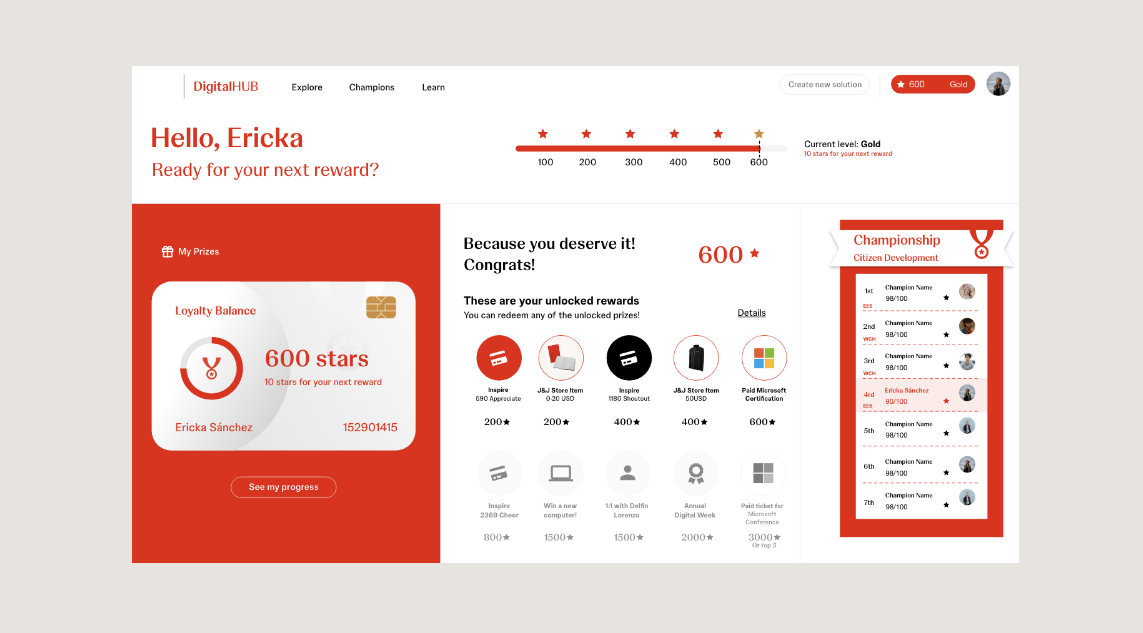
As more digital solutions were introduced across the organization, employees needed a simpler way to discover available tools, understand their purpose, develop relevant capabilities, and stay engaged with digital transformation efforts.
I contributed to shaping DigitalHub as a connected product ecosystem rather than a collection of isolated resources.
My Role
I led the experience from concept and structure through implementation and adoption, collaborating with digital leaders, product teams, subject-matter experts, and users across different locations.
-
Leading product structure and user journeys
-
Organizing tools and learning content
-
Designing navigation and interaction patterns
-
Creating communication and adoption experiences
-
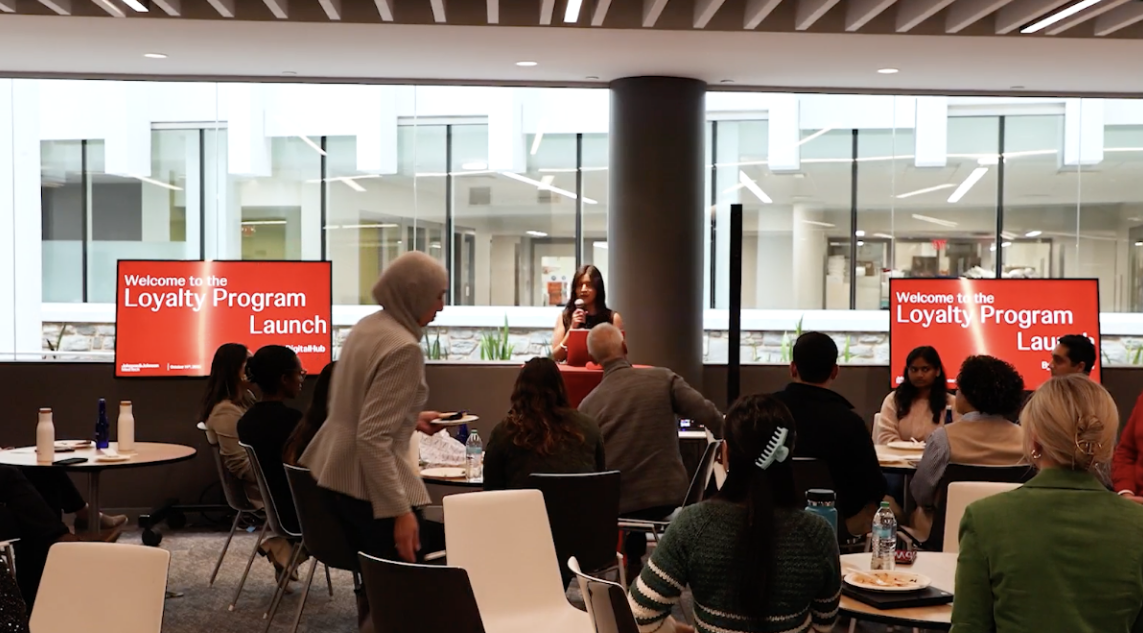
Supporting launches, training, and awareness initiatives
-
Gathering feedback and identifying opportunities for improvement
The Challenge
Digital tools and resources were distributed across multiple platforms, making them difficult to discover and understand.
The experience needed to help users:
-
Find relevant digital solutions
-
Access learning content
-
Understand available tools
-
Continue developing digital capabilities
Impact
+ 600 Users
More than 600 employees engaged through training and enablement in less than 3 months
+10K Visits
More than 10,000 global enterprise users visits in less than 3 months
1st Place
Received the Global EPICS Award (1st Place among 148 projects) for innovation and business impact.
Paperless Strategy
Overview
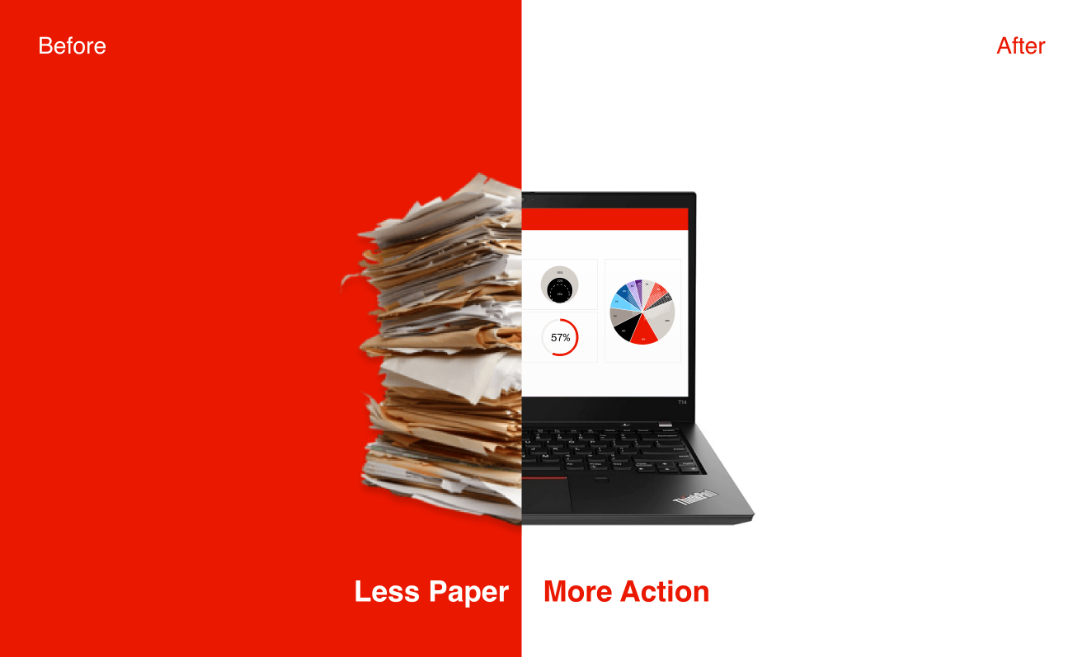
This digital transformation initiative focused on replacing manual forms, physical signatures, and paper-based approvals within a complex manufacturing environment. The initiative supported the planned elimination of more than seven million paper sheets.
My Role
I worked with production, quality, training, materials, business, and technical teams to map existing processes and identify opportunities for improvement.
Instead of simply recreating paper forms digitally, we explored workflows that could guide users, route approvals, display process status, and reduce repetitive work.
The Challenge
Some workflows required between five and twelve signatures and involved an ecosystem of more than 500 potential approvers.
The digital solution needed to consider:
-
Regulatory and quality requirements
-
Electronic signatures
-
Dynamic approval groups
-
Traceability
-
Manufacturing-floor conditions
-
Technical feasibility
Impact
+7M Paper
Paper sheets targeted for elimination through a plant-wide digital transformation initiative.
+ $5MM
Translated to +$0.5MM savings
+600 Trees
Assisting in reducing environmental impact: ±600 trees, 3.4 tons of CO2 per year, ±700,000 liters of water
Pause Artwork
Overview
Pausa is an interactive research and art project exploring the emotional experiences of moving between Spanish and English across the Ciudad Juárez–El Paso border.
Participants share personal experiences through a bilingual digital platform. Their responses are analyzed using multilingual sentiment analysis and transformed into a collective visual and physical installation.
My Role
As the creator of the project, I am responsible for:
-
UX research and bilingual questionnaire design
-
Interaction and participant experience
-
Sentiment analysis and data visualization
-
Physical prototyping and fabrication
-
Technical integration and exhibition planning
-
Gathering feedback and identifying opportunities for improvement
The Challenge
Bilingualism is often presented only as a professional skill. However, switching languages can also produce hesitation, insecurity, frustration, exclusion, and a sense of not fully belonging.
The project asks:
-
How can an interactive installation make bilingual pauses and linguistic barriers visible?
Impact
Border MX/US
Conducting UX research on bilingual language barriers between Ciudad Juárez and El Paso using Research through Design (RtD), sentiment analysis, Machine Learning, and Artificial Intelligence.
Digital Art
Designing interactive systems that combine AI, data visualization, physical computing, and art & technology to study Human-Computer Interaction and multilingual user experiences.
Casa Cafetzin App
Overview
I designed and developed a mobile augmented reality experience for Casa Cafetzin, a local coffee shop in Ciudad Juárez. The app transformed the traditional menu into an interactive experience where customers could explore products in 3D, review ingredients and nutritional information, and discover animated coffee preparation methods.
My Role
As the Product Designer, I led the end-to-end design process—from research and product definition to interaction design, prototyping, usability testing, and iteration. I worked directly with the business owners and customers, created user profiles and interaction flows, designed the interface and visual assets, and translated the experience into an AR prototype using Adobe XD, Blender, Maya, Unity, and Vuforia.
The Challenge
Customers did not have an easy way to understand the coffee shop’s products, ingredients, or preparation methods. At the same time, the business had limited technological resources and no dedicated team to maintain digital content. The challenge was to create an engaging and accessible solution that improved product communication while remaining simple enough to use without relying on a constant internet connection.
Impact
80% rate
I conducted two rounds of usability testing with 23 participants and refined the experience based on their behavior and feedback.
100% satisfaction
All critical tasks achieved a 100% completion rate, 100% of participants were satisfied with the visual design, and 80% rated the app’s ease of use positively, with no negative responses.
Manufacturing Dashboards
Overview
I designed a series of manufacturing dashboards and applications that transformed complex operational data into clear, actionable forecasts. These tools helped teams anticipate production needs, identify trends, and make more informed planning decisions.
Due to confidentiality, this case study is a representative example created with dummy data. The interface and information have been modified to protect proprietary business data.
My Role
As the Product Designer, I led the end-to-end design process across multiple applications with similar forecasting needs. I conducted stakeholder interviews and usability testing, mapped user workflows, translated complex requirements into intuitive dashboards, and created interactive prototypes to validate solutions before development.
I collaborated with multidisciplinary teams, including manufacturing experts, engineers, data analysts, product owners, and business stakeholders, to balance user needs, technical feasibility, and business priorities.
The Challenge
Manufacturing teams relied on large volumes of data from different systems to understand demand and predict future production requirements. The information was often difficult to interpret, making it challenging to recognize patterns, compare forecasts, and take action quickly.
The additional challenge was creating a scalable design approach that could support multiple applications, user roles, and manufacturing scenarios without increasing unnecessary complexity.
Impact
Identifying Risks
The dashboards gave users a clearer and more consistent way to understand historical performance, forecast future demand, and identify potential risks. Usability testing helped uncover navigation, terminology, and data-visualization issues, allowing the team to refine each experience before implementation.
Decision-Making
The reusable interaction patterns established through this work also accelerated the design of similar applications, improved consistency across products, and created a stronger foundation for data-informed decision-making within manufacturing teams.